Fitted To Certification
Fire Door Installations in Bournemouth
Certified door sets supplied and fitted throughout Bournemouth, from single flat entrances to whole floors.
See the detail
Half a fire door assembly is no fire door at all. We survey, repair and fit fire doors throughout Bournemouth, and hand you the paperwork that shows the building holds up to inspection.
Give us the outline of what you are dealing with in Bournemouth and we will reply with a straight view on it.
UK Fire Door Training approved



Bournemouth carries an unusual concentration of the building types where fire doors do the most work. Hotels and guest houses along the East and West Cliff. Licensed shared housing filling the streets behind Winton and Charminster. Care and residential homes across Talbot Woods and Queen's Park. Converted Victorian villas in Boscombe and Springbourne now holding six or eight flats apiece. Offices and language schools clustered around Lansdowne.
Every one of those has a duty holder who has to be able to prove the fire doors work. We handle that end to end for landlords, agents, hoteliers, trustees and facilities teams: find what is wrong, put it right, and leave behind a record that stands up when someone asks to see it.
One team surveys, one team repairs, one team installs. Nothing gets lost in the handover between finding a fault and fixing it.
Certified door sets supplied and fitted throughout Bournemouth, from single flat entrances to whole floors.
See the detailTargeted remedial work that returns failing Bournemouth fire doors to their certified performance.
See the detailComponent-by-component surveys with the written record Bournemouth duty holders need on file.
See the detail
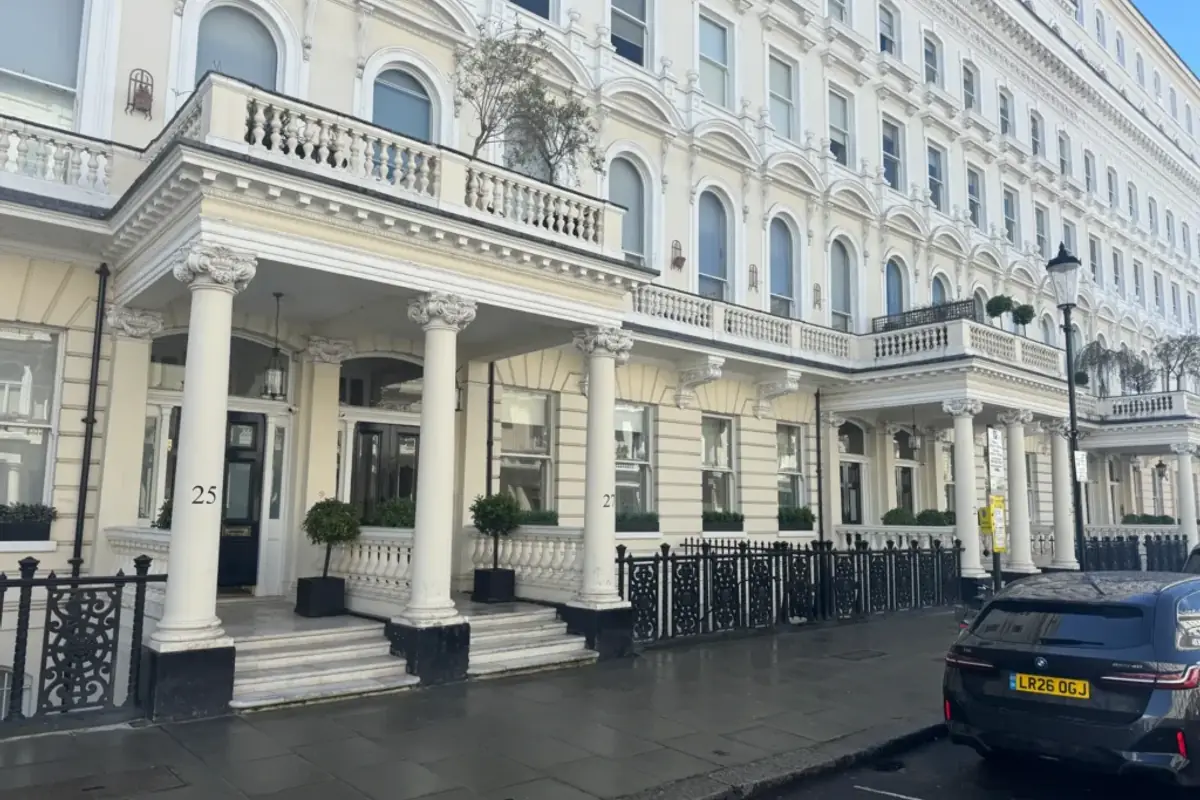

Send over the building and the problem. You will get an honest read on what it needs and what it does not.
Passive fire protection is the whole job here, not a sideline to general building work.
Graded reports written to be handed straight to an assessor, insurer or licensing officer.
Replacement gets recommended when it is genuinely needed, not as a default position.
Work sequenced around guests, residents and term dates so escape routes stay usable.
These are the parts of Bournemouth we are in most weeks. The list is not a boundary, so if your building sits beyond it, the answer is usually still yes.
Six questions that come up on almost every job, answered without the regulatory fog.
The responsible person, which in a house in multiple occupation is normally the landlord or the managing agent acting for them. That duty covers specifying the right doors, keeping them maintained, and being able to show the checks were actually carried out.
Bournemouth has a dense shared-housing market around Winton, Charminster and Talbot, much of it licensed by BCP Council. Licence conditions frequently reference fire door standards directly, so a failure here is not only a safety problem, it puts the licence itself at risk.
Sleeping accommodation attracts the strictest expectations in fire safety enforcement, because guests are unfamiliar with the building and may be asleep when an alarm sounds. Bedroom doors, corridor cross-doors and stairway doors all form part of the protected escape route and must perform as tested.
Along the East Cliff and West Cliff, many hotels occupy converted Victorian and Edwardian villas where the escape strategy has been retro-fitted over decades. Doors get replaced piecemeal, hardware gets swapped for something that looks similar, and the paperwork rarely keeps pace. That combination is what we are most often asked to unpick.
Certified door sets carry evidence of their rating, usually a plug or label in the top edge or hinge edge of the leaf, and the supporting documentation should identify the tested configuration. A heavy door is not automatically a fire door, and a fire door stripped of its correct hardware is no longer the product that was tested.
Where labels have been painted over, removed during redecoration, or never existed because the door predates current practice, an inspection assesses construction and condition and tells you what can reasonably be evidenced and what cannot.
Nothing dramatic. The report grades each defect so you can see what needs attention immediately and what can be scheduled, and a large proportion of failures come down to seals, gaps and closers rather than the door itself.
We then work through the remedial list in a sensible order, prioritising escape routes and any door protecting a stairway. You end up with a documented before-and-after position rather than an open-ended problem.
In a block of flats, yes. The entrance door to each dwelling is a fire door in law, and it is one of the most commonly compromised elements in the entire building because residents replace them, add letterboxes and cat flaps, or fit their own locks.
Responsibility can be genuinely complicated where a lease divides ownership between leaseholder and freeholder. We survey the doors and report what we find; who funds the remedy is then a question for the lease, and having the evidence usually makes that conversation shorter.
Yes, and Bournemouth has a good deal of both, particularly around the Town Centre gardens, Meyrick Park and the older cliff-top streets. Original joinery in these buildings often has heritage value, and stripping it out is neither the only option nor usually the best one.
Where consent constraints apply, upgrading an existing door can sometimes achieve compliant performance while retaining the original leaf. We will tell you honestly whether that route is viable for your specific door rather than assuming either extreme.
Whether it is one flat entrance door or a hotel with ninety of them, send us the outline and we will tell you what the job actually involves before anyone commits to anything.
Give us the outline of what you are dealing with in Bournemouth and we will reply with a straight view on it.